
Building Trust Through Responsible AI Practices
- Altruva AI

- Dec 20, 2025
- 4 min read
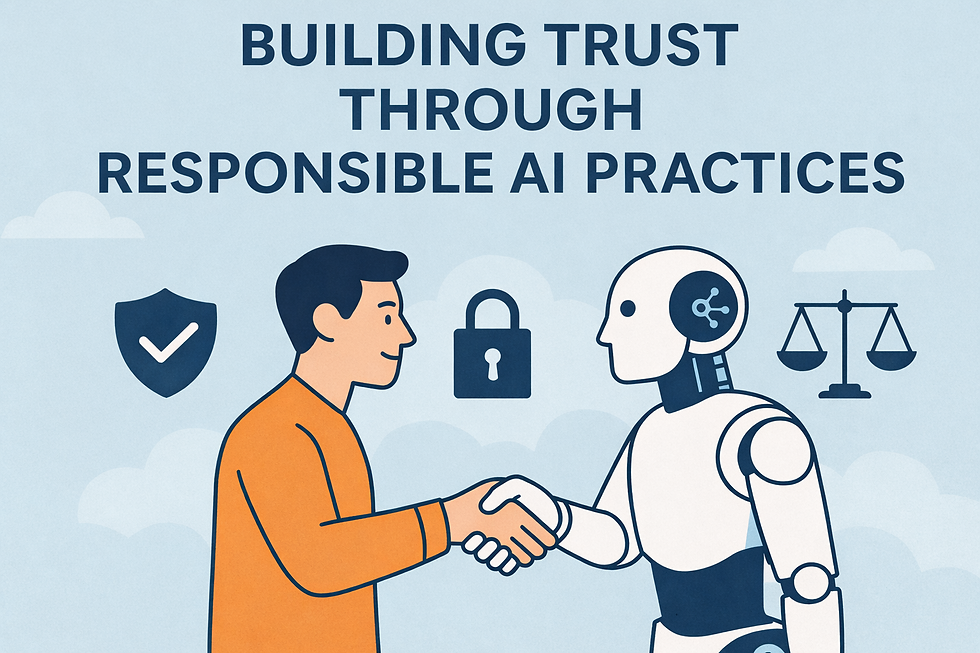
Why transparency isn't just good policy - it's your competitive advantage in the AI era
Let me share a conversation that happened in my office last week. A nonprofit CEO called, voice tight with concern: "Our board is asking tough questions about AI. They want to know how we can use it responsibly without compromising donor trust. Honestly, I'm not sure I have good answers."
Sound familiar?
If you're navigating the intersection of AI innovation and nonprofit accountability, you're not alone. The challenge isn't just implementing AI effectively - it's doing so in a way that strengthens rather than undermines the trust that forms the foundation of every successful nonprofit.
Here's what I've learned after working with nearly 100 nonprofit organizations: Trust isn't just maintained through good intentions. It's built through deliberate, transparent practices that demonstrate your commitment to responsible stewardship.
The Trust Imperative in AI Implementation
Nonprofit organizations operate on a fundamentally different premise than their for-profit counterparts. When someone makes a donation, they're placing faith in your organization's ability to use their contribution wisely and effectively. When you introduce AI into that equation, you're asking donors and beneficiaries to trust not just your organization, but your technology decisions as well.
Accountability means being accountable in aligning AI use with your mission, values, and ethics. Transparency and Explainability involve being open and clear about how you're using AI. But what does this actually look like in practice?
The organizations getting this right aren't just checking compliance boxes - they're turning transparency into a strategic advantage that deepens donor relationships and strengthens community impact.
The Four Pillars of Trustworthy AI Implementation
1. Mission Alignment Transparency
Before implementing any AI solution, successful nonprofits ask one fundamental question: How does this technology advance our mission rather than distract from it?
This isn't about creating lengthy technical explanations. It's about clearly communicating the connection between your AI tools and your organizational purpose. For example, instead of saying "We're using AI for donor management," try "We're using intelligent data analysis to ensure we can spend more time building meaningful relationships with supporters and less time on administrative tasks."
2. Process Clarity
Your stakeholders deserve to understand not just what AI tools you're using, but how you're using them. This means being specific about:
Which processes now include AI assistance
What types of decisions AI helps inform (versus decisions still made by humans)
How you ensure AI recommendations align with your values
What safeguards you've implemented to prevent errors or bias
3. Data Stewardship Excellence
Trust in AI starts with trust in data handling. Organizations building lasting credibility establish clear policies around:
What data you collect and why
How AI systems access and analyze this information
What protections exist to prevent misuse
How individuals can understand or correct their data
The key isn't having perfect systems - it's having transparent processes for continuous improvement.
4. Human-Centered Decision Making
Perhaps most importantly, trustworthy AI implementation maintains clear human accountability. Biases in AI models can unintentionally discriminate against certain demographics, which is why successful nonprofits ensure that critical decisions affecting people's lives remain firmly under human oversight.
This means establishing protocols for when AI recommendations require human review, who makes final decisions, and how to address concerns when they arise.
Practical Steps for Building Trust
Start with Your Board
Your board needs to understand and approve your AI strategy before you can expect stakeholders to trust it. Develop board-level literacy around AI applications relevant to your work. This isn't about turning board members into technologists - it's about ensuring they can provide meaningful oversight and answer stakeholder questions confidently.
Create Clear Communication Strategies
Develop simple, jargon-free explanations of how AI supports your work. Test these explanations with diverse stakeholders to ensure clarity across different audiences. Remember: if you can't explain it simply, you don't understand it well enough.
Implement Feedback Mechanisms
Trust is built through dialogue, not monologue. Create channels for stakeholders to ask questions, raise concerns, and provide feedback about your AI implementation. More importantly, demonstrate how you respond to and incorporate this input.
Document Your Decision-Making Process
Maintain clear records of why you chose specific AI tools, how you evaluated alternatives, and what safeguards you implemented. This documentation serves multiple purposes: it builds stakeholder confidence, supports board oversight, and helps you make better decisions as you scale.
The Transparency Advantage
Here's something interesting I've observed: Organizations that approach AI transparency thoughtfully don't just maintain trust - they often strengthen it. When you demonstrate careful, value-driven decision-making around technology, you're modeling the same thoughtfulness donors hope to see in all aspects of your operations.
Transparency also creates accountability that improves your AI implementation. When you know you'll need to explain your technology choices to stakeholders, you naturally make more thoughtful decisions about what to implement and how.
Addressing Common Concerns
"Won't transparency make us look less sophisticated?"
Actually, the opposite. Thoughtful transparency demonstrates technological maturity and organizational confidence. It shows you're implementing AI strategically, not impulsively.
"What if our AI tools make mistakes?"
They will. The question is whether you'll handle mistakes transparently or defensively. Organizations that acknowledge limitations and demonstrate continuous improvement build stronger trust than those claiming perfection.
"How much detail should we share?"
Focus on impact rather than technical specifications. Stakeholders care more about how AI helps you serve your mission than about the specific algorithms you're using.
The Long-Term Trust Investment
Building trust through responsible AI practices isn't just about avoiding problems - it's about positioning your organization for sustainable success in an increasingly AI-integrated world.
Donors, board members, and community partners are watching how nonprofits navigate this technological transition. The organizations that approach AI with transparency, accountability, and clear mission alignment will be the ones that thrive as the technology continues evolving.
Moving Forward with Confidence
The path to trustworthy AI implementation isn't complicated, but it does require intentionality. Start with your mission, engage your stakeholders in dialogue, and make transparency a cornerstone of your AI strategy from day one.
Remember: Your stakeholders don't need you to be perfect. They need you to be thoughtful, accountable, and committed to using every tool (including AI) in service of your mission.
The non-profits building lasting trust around AI aren't the ones with the most sophisticated technology. They're the ones with the clearest values and the strongest commitment to transparent stewardship.
That's not just good ethics. In a sector built on trust, it's good business.
Ready to build trust through responsible AI implementation? Connect with our team at Altruva.ai to explore how transparent, mission-aligned AI solutions can strengthen your organization's impact and stakeholder relationships.
Comments